

Dan Limmer, BS, NRP
With ongoing updates from the American Heart Association, the NREMT exam is changing by emphasizing current science.

by Limmer Education
Our articles are read by an automated voice. We offer the option to listen to our articles as soon as they are published to enhance accessibility. Issues? Please let us know using the contact form.
With the ever-changing ways students learn nowadays, from virtual classes to short-form videos, educators must adapt to meet new educational preferences. How do you engage students meaningfully, and set them up for success in the EMS classroom?
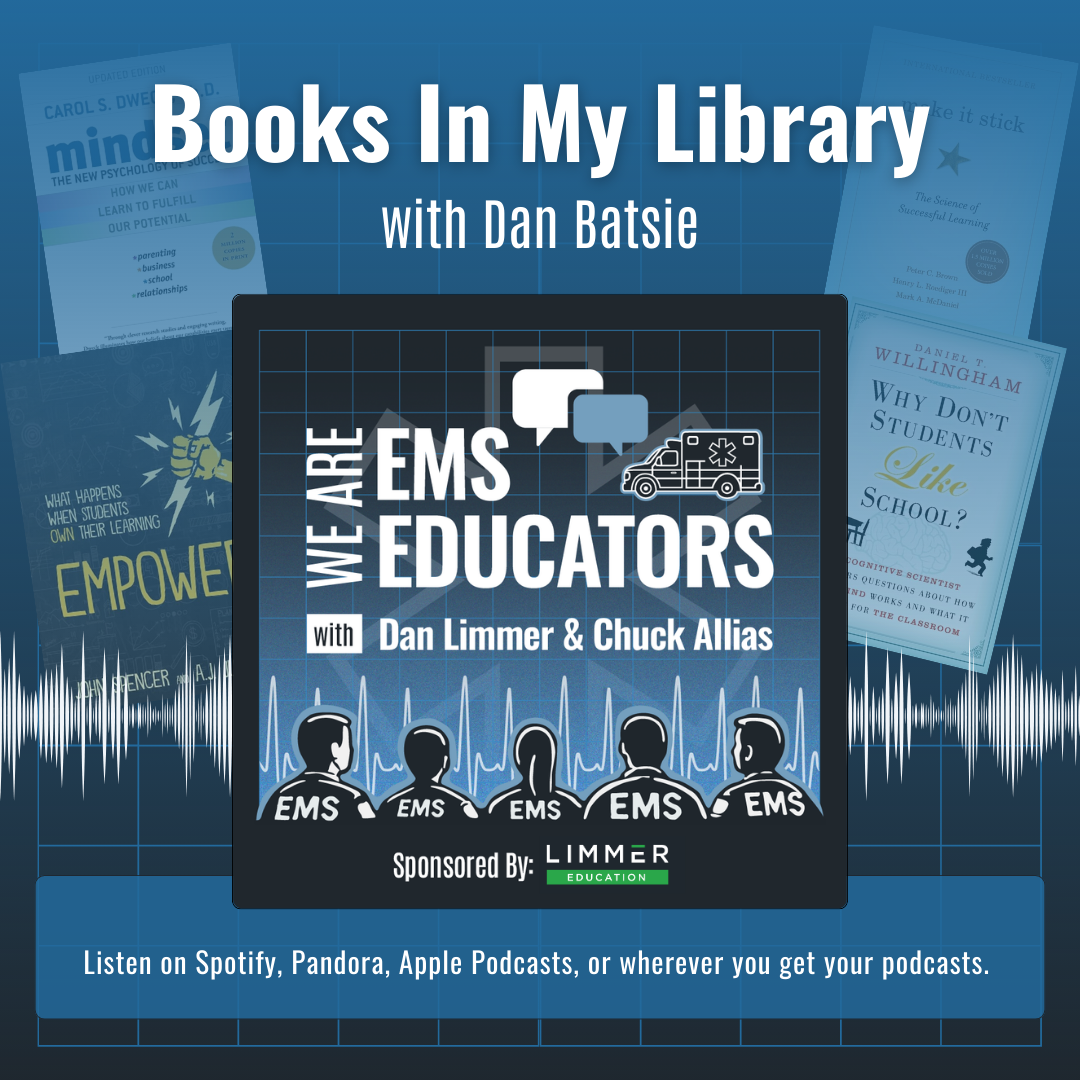
Dan Batsie, Director of Emergency Preparedness, Response, and Injury Prevention for the Vermont Department of Health, discussed some methods in an episode of the We Are EMS Educators podcast. He covers the transformative educational concepts found in these books:
Mindset: The Psychology of Success by Carol Dweck
Make It Stick: The Science of Successful Learning by Peter Brown
Empower: What Happens When Students Own Their Learning by John Spencer
Why Don’t Students Like School? A Cognitive Scientist Answers Questions About How the Mind Works and What It Means for the Classroom by Daniel T. Willingham
Below are five key takeaways from the conversation. You can also listen to the podcast episode here.
Growth mindset, a concept from Mindset: The Psychology of Success, challenges the traditional view of education and complements the demanding EMS coursework.
For those new to the growth mindset theory, it is a belief that abilities and intelligence can be developed through dedication and hard work. Students are encouraged to see every test, scenario, and failure as an opportunity to grow. Educators can create an environment where it’s okay to fail as long as students learn from their mistakes.
Focus on teaching students that their abilities aren't fixed. They can and should strive to improve continuously.
With EMS students, retention is a must. Students need to recall critical information while in high-stress situations. Teaching students how to do this is discussed in Make It Stick: The Science of Successful Learning, which outlines the science behind how people learn and retain information.
Test taking generally involves students cramming and memorizing information, often forgetting what they learned once they turn in the exam. This might work with history or math subjects; however, in EMS, the stakes are high and lives can be saved when a student retains their coursework.
In your class, incorporate retrieval practice, spaced repetition, and interleaving into your teaching methods. Such strategies help embed knowledge into long-term memories, ensuring students can recall critical skills during an emergency.
The concept of empowering students to own their learning, taken from Empower: What Happens When Students Own Their Learning, is relevant in EMS classrooms. Students take an active role in their education and are no longer passive consumers of information. They become active creators of knowledge.
Instead of simply relaying the curriculum, encourage students to engage with the material, explore interests, and use new knowledge in creative ways. With this control over learning, students become more invested, confident, and prepared to handle the stressful demands of the job.
Failure isn’t something to avoid. Rather, it’s a necessary part of the learning process, as discussed in Why Don’t Students Like School? A Cognitive Scientist Answers Questions About How the Mind Works and What It Means for the Classroom.
Students often fail not because they lack intelligence, but because their brains are not naturally inclined toward effortful thinking. Batsie believes constructive feedback pushes students to move beyond elementary understanding and develop lasting knowledge.
Guide your students through failures by providing valuable feedback and helping them improve. This builds competency and resilience, which are helpful traits for anyone working EMS.
Move away from traditional tools such as PowerPoint decks and incorporate interactive elements such as simulations, case studies, and scenario-based learning. Why? EMS education is about preparing students for action, not passing a written test.
To start, try incorporating retrieval practice or give students more control over how they study and review materials. Limmer Education has a variety of ideas and free resources for actively engaging your students. As you embrace new teaching strategies, your students will become not only ready for their exams but also equipped to handle the complexities of the field.
Join us for more episodes of We Are EMS Educators that can help you grow as an EMS educator. We cover topics such as how to write questions, working with neurodiverse students, and the teacher/student relationship.
Dan Limmer, BS, NRP
With ongoing updates from the American Heart Association, the NREMT exam is changing by emphasizing current science.

Dan Limmer, BS, NRP
Understanding pathophysiology transforms guesswork into informed, patient-centered decision-making.

Limmer Education
Learn how to write better EMS multiple-choice questions that assess clinical judgment, not just memorization.