



Limmer Education
In a two-part 7 Things EMS podcast, Dan Limmer and Rachel Tank break down the real story behind emergency births.
by Limmer Education
Our articles are read by an automated voice. We offer the option to listen to our articles as soon as they are published to enhance accessibility. Issues? Please let us know using the contact form.
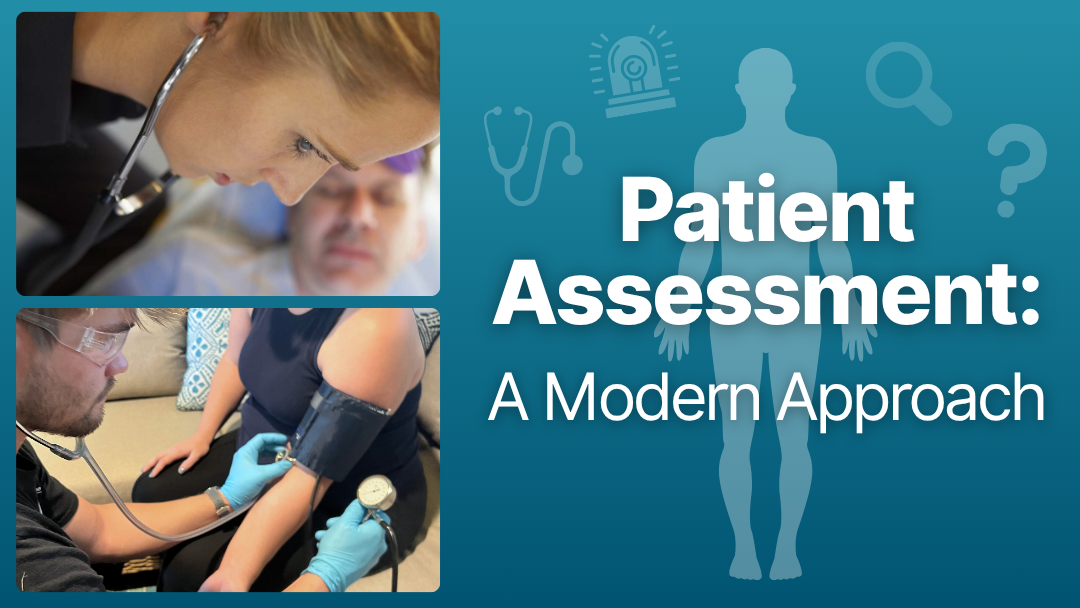
One of the most common challenges we hear from students and EMS educators, right alongside NREMT exam anxiety, is confusion around the patient assessment process for EMTs.
Even in 2026, patient assessment for EMS is one of the most necessary (and most misunderstood) skills in both education and real-world practice. Although the NREMT exam continues to change to scenario-based judgment and real-time decision-making, many students still struggle to connect assessment with how to apply it in the field.
To understand why this confusion, here’s a look at how EMS education has changed and why patient assessment has become so important to learn.
The way EMTs are taught patient assessment changed multiple times over the past few decades, often leaving gaps in terminology and understanding.
Pre-1994 EMT-A Curriculum
Patient assessment was taught using a straightforward primary and secondary assessment model.
1994 EMT-B Curriculum Changes
The structure was modified to use terms such as initial assessment, focused assessment, and rapid trauma assessment. Although intended to simplify care, this model also created unintended discrepancies. EMTs didn’t receive the training needed for specific conditions.
2009 National Education Standards
EMS education returned to a primary and secondary assessment framework but without fully standardizing step-by-step instruction. At the same time, expanding pathophysiology knowledge and EMS treatment options made strong assessment skills even more important for safe decision-making.
2020s
Modern EMS education, and the current direction of the NREMT exam. The new EMT test plan includes 39-43% for primary assessment. Questions include new types, such as multiple response, drag & drop, option table, and build list.
As EMS practice has become more advanced, patient assessment for EMS has also transformed, moving away from rigid memorization and toward clinical thinking.
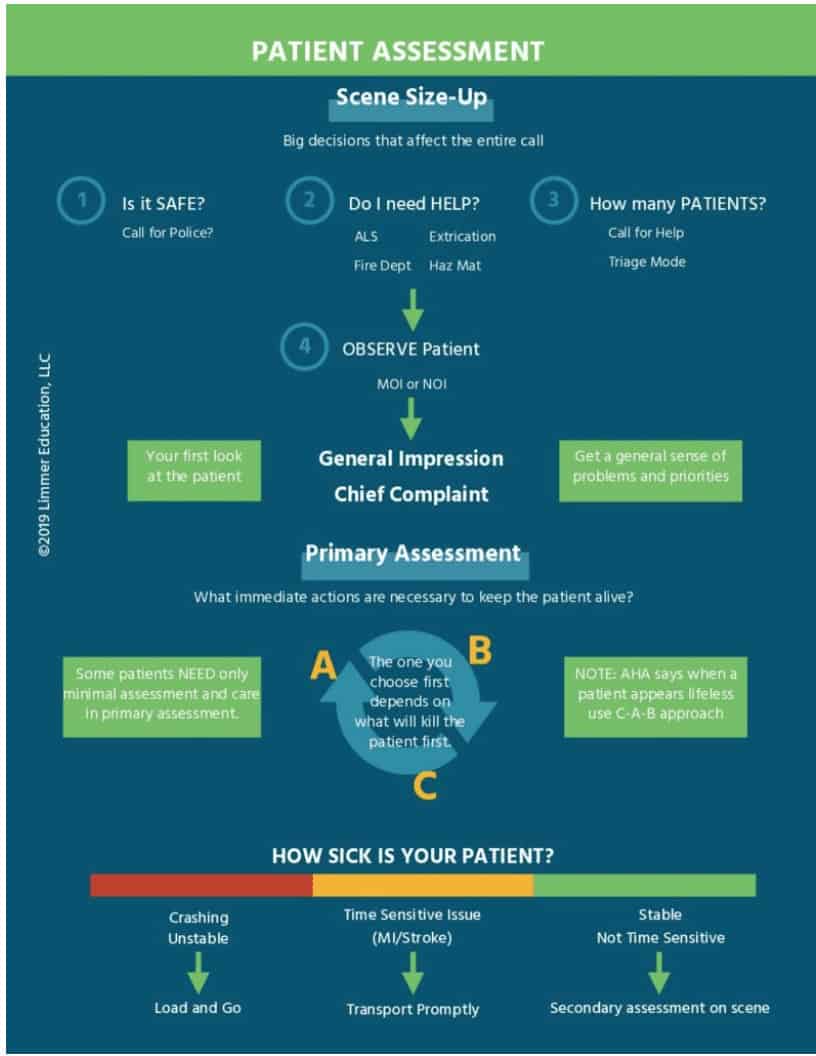
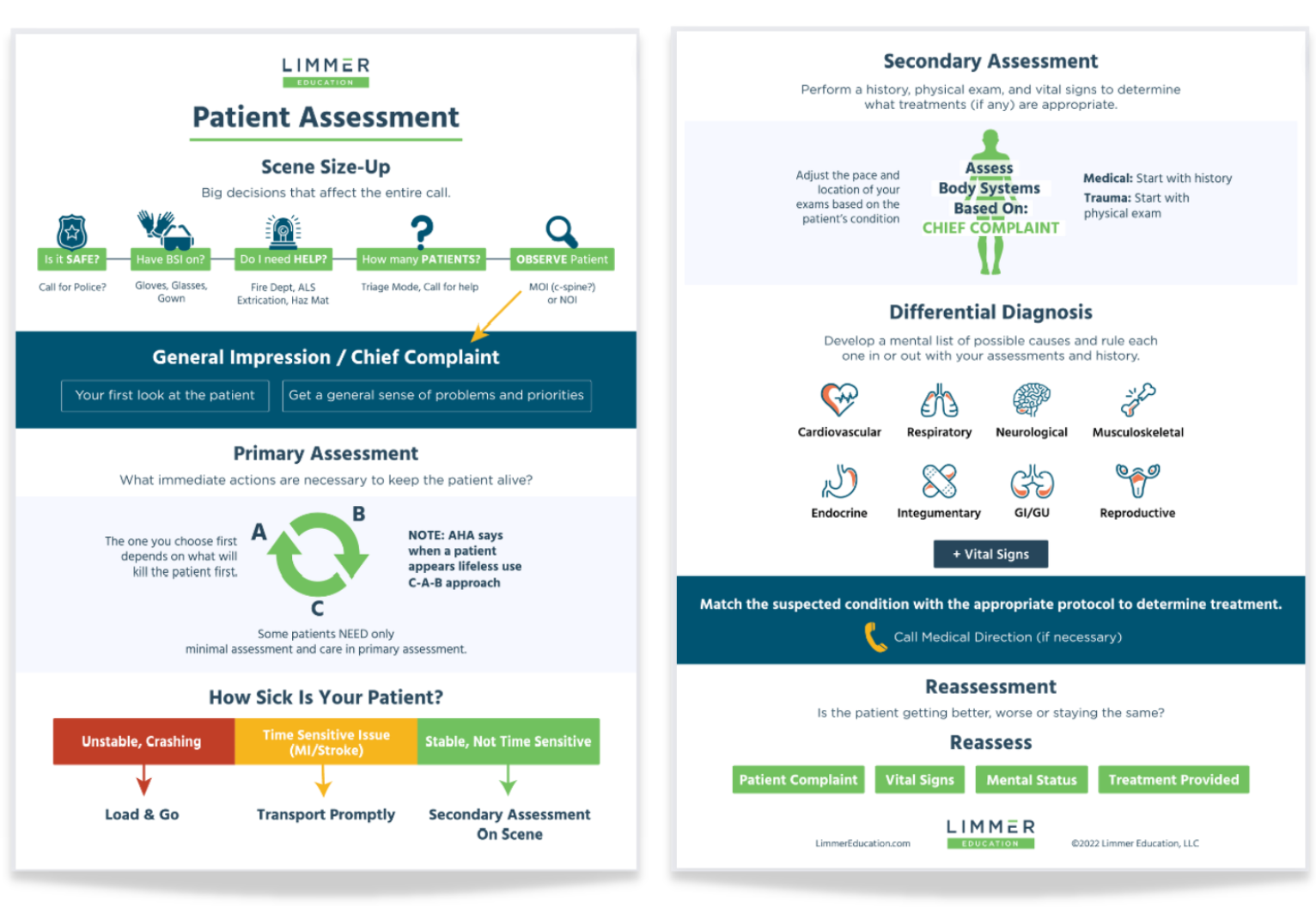
To support this shift, we developed the Patient Assessment Flowchart. This 2-set chart highlights a more mature, efficient, and thought-based process.
You can purchase an 18 x 24-inch poster of this flowchart for your classroom.
Key principles of patient assessment now include:
Scene Size-Up Requires Asking Questions
First, ensure scene safety and identify needed resources. Then, transition into patient-focused observation for immediate clinical clues that guide the primary assessment.
Primary Assessment is Priority-Based, Not Linear
Primary assessment focuses on identifying and correcting life-threatening conditions first, matching the reality of EMS decision-making.
Assessment is a Continuum, Not a Checklist
Patient presentation varies significantly. The speed and depth of assessment depend on condition severity, stability and ever-changing findings.
Ask Yourself: How Sick is Your Patient?
Load and go is for unstable/crashing patients. Secondary assessments can be made for more stable patients.
Secondary Assessments
Assess based on chief complaint and general impression to narrow the differential diagnosis.
Reassessment and Reassess
Always watch for a patient getting better, worse, or staying the same.
SAMPLE and OPQRST are much less prominent.
This is because they've become a mindless crutch for students and educators. We need to return them to the place they belong, as mnemonics, for when we want to make sure we’ve covered the basics. They are not the primary driver for the history.
What's the driver for history and physical exam if SAMPLE and OPQRST aren’t? Body system exams. We need to know to look for JVD and pedal edema routinely in the cardiac and respiratory patient. We must ask about orthopnea, weight gain, and dyspnea on exertion. We would find none of this if we only used OPQRST and SAMPLE. Pathophysiology allows us to understand more and to know what to ask.
In 2026, students are expected to demonstrate more than memorization to pass the NREMT. They must show clinical reasoning under pressure, especially in patient assessment for EMS scenarios.
The flowchart and approach align closely with current NREMT-style expectations, where students are evaluated on:
Scene interpretation
Priority decision-making
Clinical thinking
Patient-centered assessment pathways
EMS education has changed, and patient assessment must also change with it. By moving away from outdated, step-based mantras and toward question-based assessment models, EMTs can develop a more intuitive, accurate and clinically sound approach to patient care.
Limmer Education
In a two-part 7 Things EMS podcast, Dan Limmer and Rachel Tank break down the real story behind emergency births.


Dan Limmer, BS, NRP
What's with the communication gap between the AHA and the EMS community?

Limmer Education
What if there was a dependable way to get correct, relevant, scope-specific, well-explained EMT answers, 24/7?