



Limmer Education
If you're an EMT or paramedic, you can parlay your expertise into a flexible and potentially lucrative side gig.
by Limmer Education
Our articles are read by an automated voice. We offer the option to listen to our articles as soon as they are published to enhance accessibility. Issues? Please let us know using the contact form.
You chose prehospital care because it’s a calling. Day in and day out, you spend your time with people who are often having the worst day of their lives. Despite the long days and significant responsibility, you want that paramedic title because it’s a noble profession. You earn a living caring for your community.
But the barrier to entry is passing a challenging test.
Failing the paramedic exam means you ran headfirst into a new career path, and all you need now is a smart plan. If you failed your NRP exam, you need to figure out why.
We’re here to help.
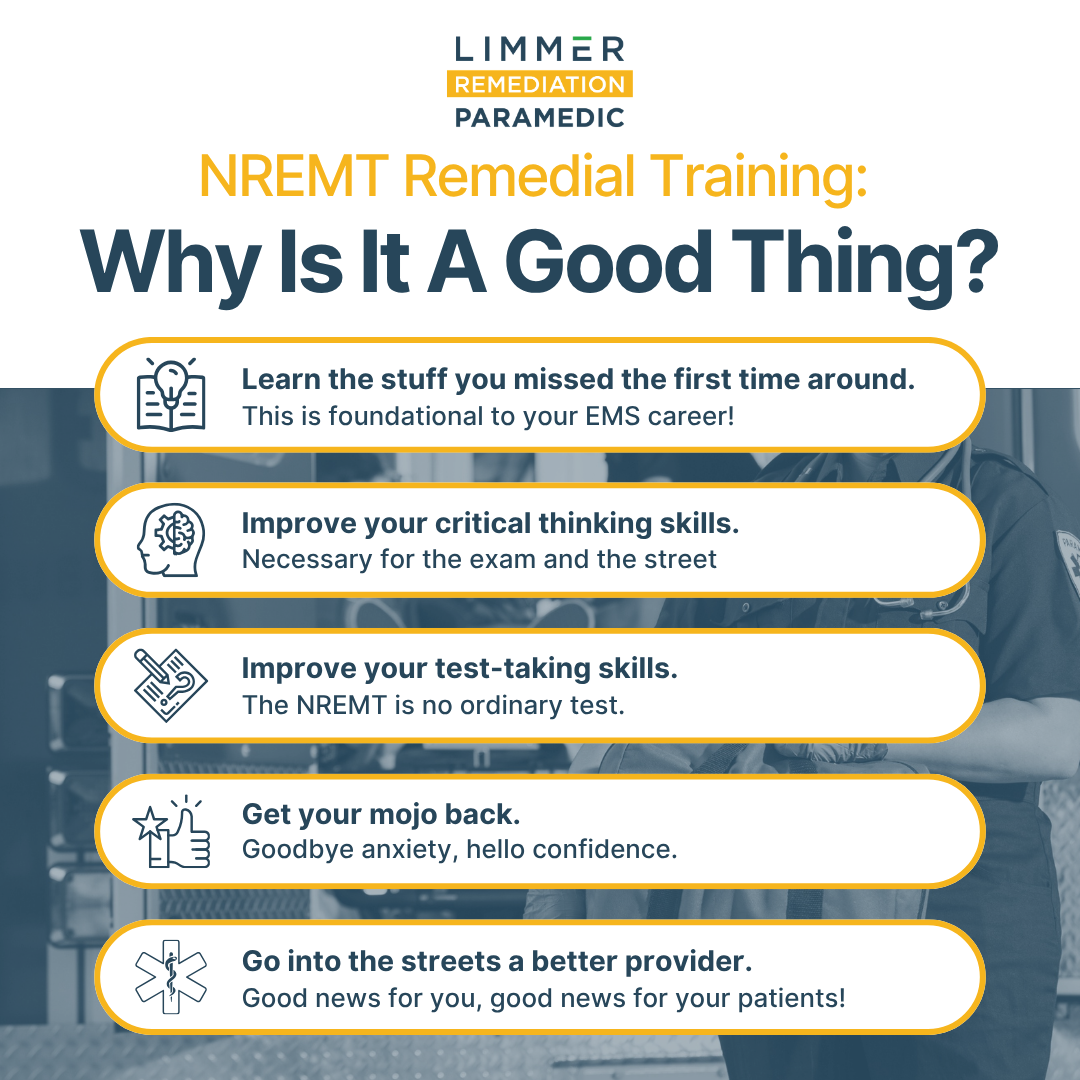
Failing the NREMT happens for many reasons, and most often it’s fixable.
Common causes for not passing include:
You had a bad day/week/month; sometimes the test occurs when other things are happening in your life
Test anxiety; not everyone can relax when the stakes are high
Waiting too long to test after class and you forget what you learned
Lack of experience with NREMT-style questions; contrary to popular belief, the test is not designed to fool you, but the questions require a lot of critical thinking skills
Lack of clinical knowledge
Let’s look at some of these issues and what you can do.
Remember: You have control over your future.
The NREMT requires you to understand and apply multiple points at once and put them into a clinical scenario. You’re expected to already think like a paramedic on the job. We know this is a tough ask, especially in a test environment.
Perhaps you did well in class and know the content. Unfortunately, class exams don’t always reflect how the Registry asks questions. Without enough exposure to NREMT-style scenarios, your knowledge doesn’t apply the same way.
How to fix: Choose practice exams written in the same format as the NREMT.
After EACH practice exam question, ask yourself: Why is this answer correct and why are the other answers wrong? If you can’t answer these two questions, review the topic before moving on. That’s how you train your brain to think like the exam.
You can also use Paramedic PASS and Paramedic Review Plus for study help.
Paramedic PASS
Get this if you need high-intensity NREMT prep and already have a decent understanding of clinical topics.
Paramedic Review Plus
Get this if you need a comprehensive review of class material while you prep for the NREMT.
Perhaps class moved fast and you needed more time to grasp foundational concepts. Perhaps the exams were hard. Unfortunately, if you don’t understand the material, test-taking tricks will not save you.
How to fix: Re-review the chapters. To avoid feeling overwhelmed, focus on pathophysiology, assessment, and treatment priorities rather than all the information at once. You can also register for a remediation course. If you fail the NREMT three times, the National Registry requires you to take a remedial course before your next attempt (30 hours for paramedic). Limmer Education Remediation is the most comprehensive course available.
Maybe you did everything right. You attended class, studied hard, stayed engaged, and still struggled to pass the NREMT. If you have issues with attention, knowledge retention, or reading, you might need extra support. This doesn’t affect your ability to be a great paramedic; it might only affect your ability to pass a test.
How to fix: Sign up for remediation education. You can go at your own pace, rather than the pace of your school. You might want to request additional accommodations from the Registry during the test.
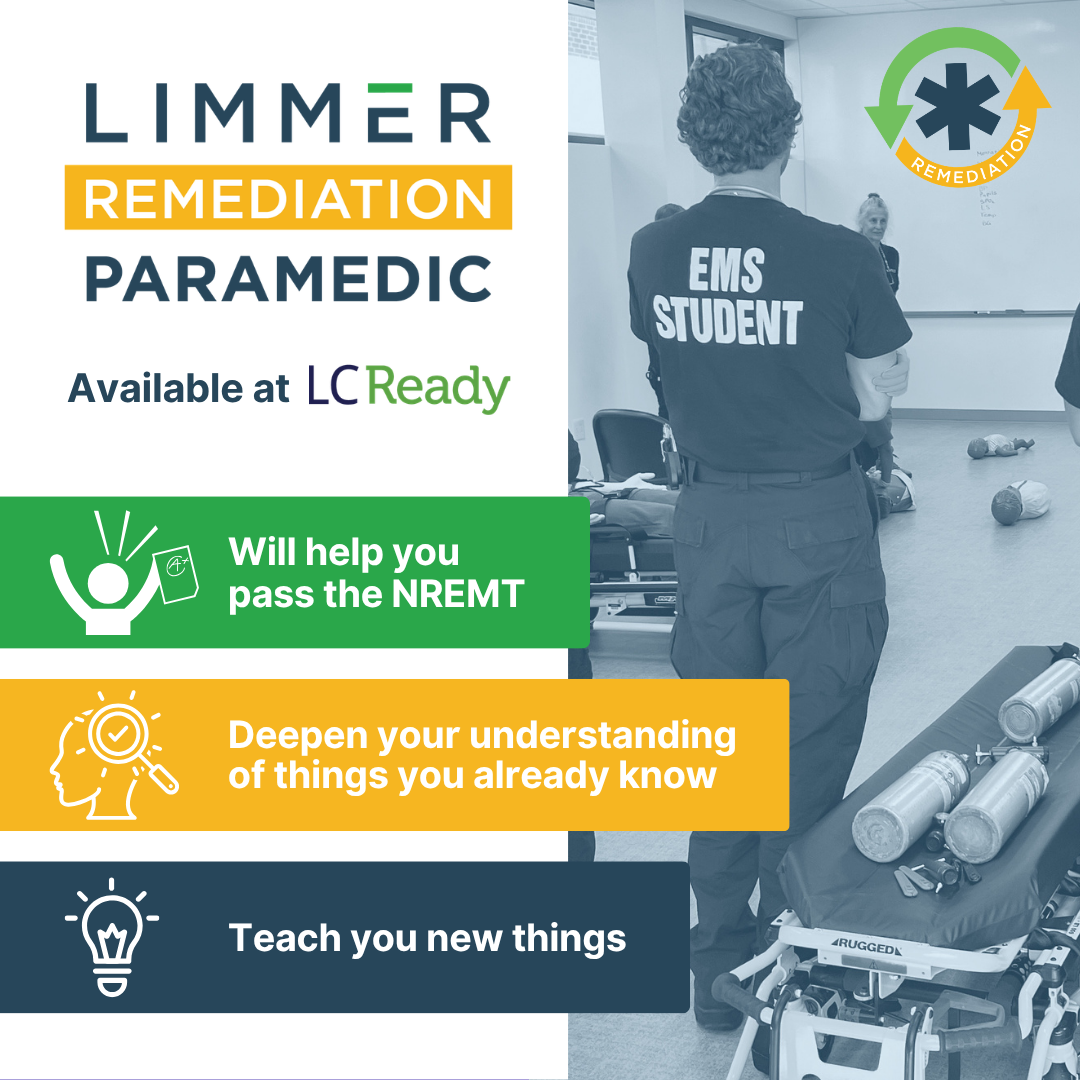
After three failed attempts, the Registry requires remedial training. We know that can be frustrating, but remediation helps you learn what didn’t stick in class, improve quick-thinking abilities and regain confidence. The proper remediation course resets habits that aren’t working and replaces them with ones that do.
In the CAPCE-accredited Paramedic Remediation course with Limmer Education, you receive a structured, practical review of the paramedic scope of practice.
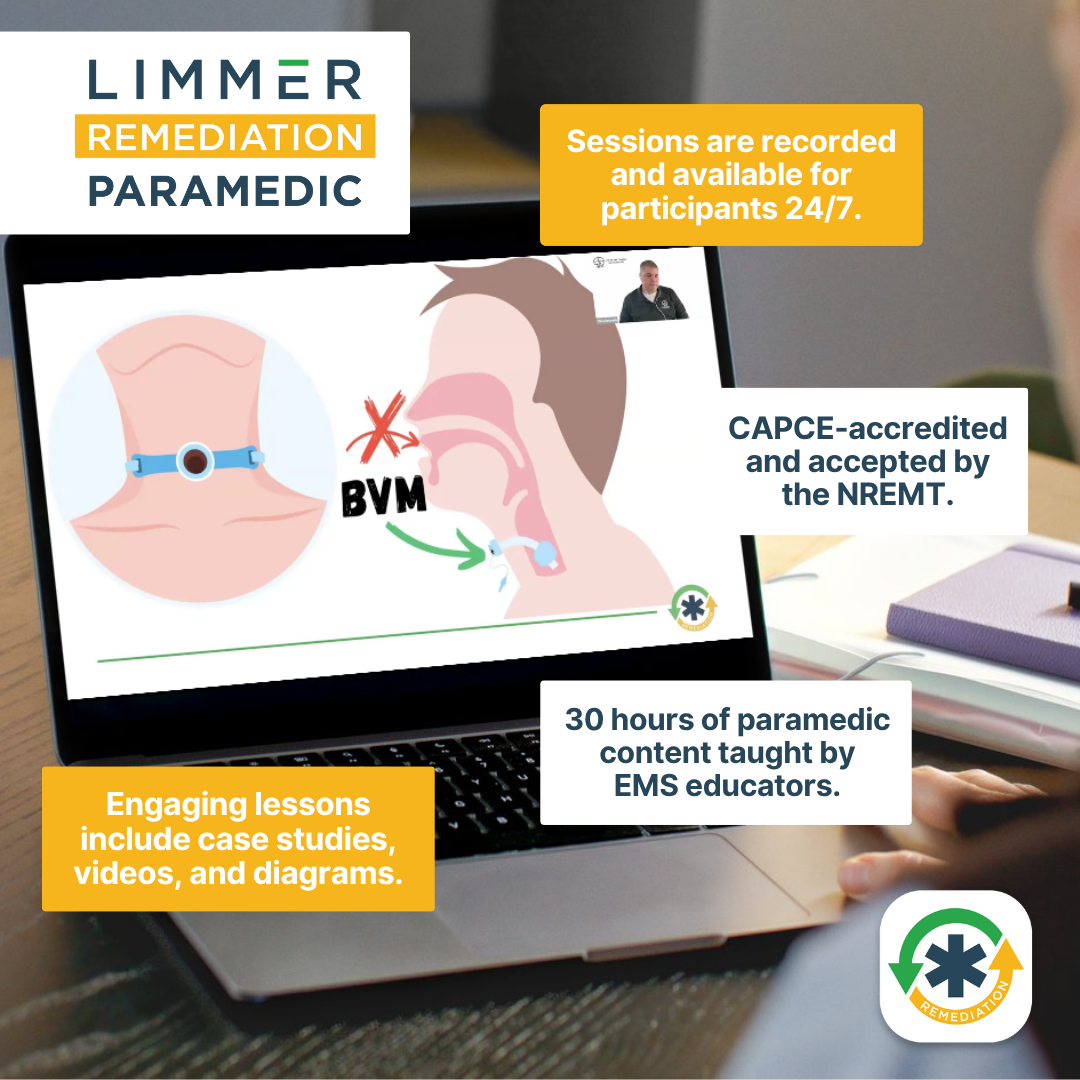
Highlights include:
30-hour program accepted by the NREMT
42-focused sessions led by 11 expert paramedic educators, which includes education from Dan Limmer
Each session is a 30-, 45-, or 60-minute deep dive into essential paramedic topics
On-demand access to learn at your own pace
Engaging, conversational instruction
NREMT-style practice and strategy, so you prepare exactly how you test
A strategic summary of the presentation to help you lock in the most critical takeaways
You have 90 days from the date of purchase to complete the course.
Learn more about Limmer's Paramedic Remediation course.
Your patients deserve a medical professional who can think critically under pressure. The NREMT is designed to test exactly that. If you stumbled, it doesn’t mean you’re done. It means you adjust, refocus, and keep going.
IMPORTANT: You didn’t come this far to stop now.
Limmer Education
If you're an EMT or paramedic, you can parlay your expertise into a flexible and potentially lucrative side gig.
Limmer Education
Here’s a look at how EMS education has changed and why patient assessment has become valuable to learn.

Limmer Education
The guidelines restore back blows for choking and add death-notification training. There is controversy over mechanical CPR and dual defibrillation.