



Limmer Education
If you're an EMT or paramedic, you can parlay your expertise into a flexible and potentially lucrative side gig.
by Limmer Education
Our articles are read by an automated voice. We offer the option to listen to our articles as soon as they are published to enhance accessibility. Issues? Please let us know using the contact form.
Shock happens when the body isn't getting enough blood flow to its tissues, a condition known as hypoperfusion. Perfusion, you may recall, is how blood moves through the body, e.g., “Air goes in and out, blood goes round and round, any variation on this is bad.” Hypoperfusion is bad news.
Many different injuries and illnesses can cause shock. However, shock presents similarly in most patients. Here we review the four types or causes of shock, along with the overall presentation of shock patients.
Of course EMS providers must be able to recognize all the signs and symptoms of each type of shock. Just as importantly, they should understand what's happening inside the body to cause those signs and symptoms. This is the pathophysiology of shock.
There are four functional types of shock. All types of shock fit into one of these four categories.
Hypovolemic
Cardiogenic
Distributive
Obstructive
Hypovolemic means low volume. We usually associate hypovolemic shock with heavy bleeding, but don't forget that it can also be caused by diarrhea, vomiting, and dehydration. Infants and children who aren't feeding and have diarrhea are at great risk of hypovolemic shock. Worldwide, diarrheal diseases are the number two leading cause of death in kids. Hyperglycemic patients experience polyuria (frequent urination), which can also cause dehydration. So remember, low volume can be caused by a number of factors besides blood loss.
When the blood volume is too low, the pressure in the cardiovascular system is reduced. Stroke volume decreases, which decreases cardiac output and blood pressure. With reduced perfusion, cells don’t get oxygen, and carbon dioxide isn’t removed from cells.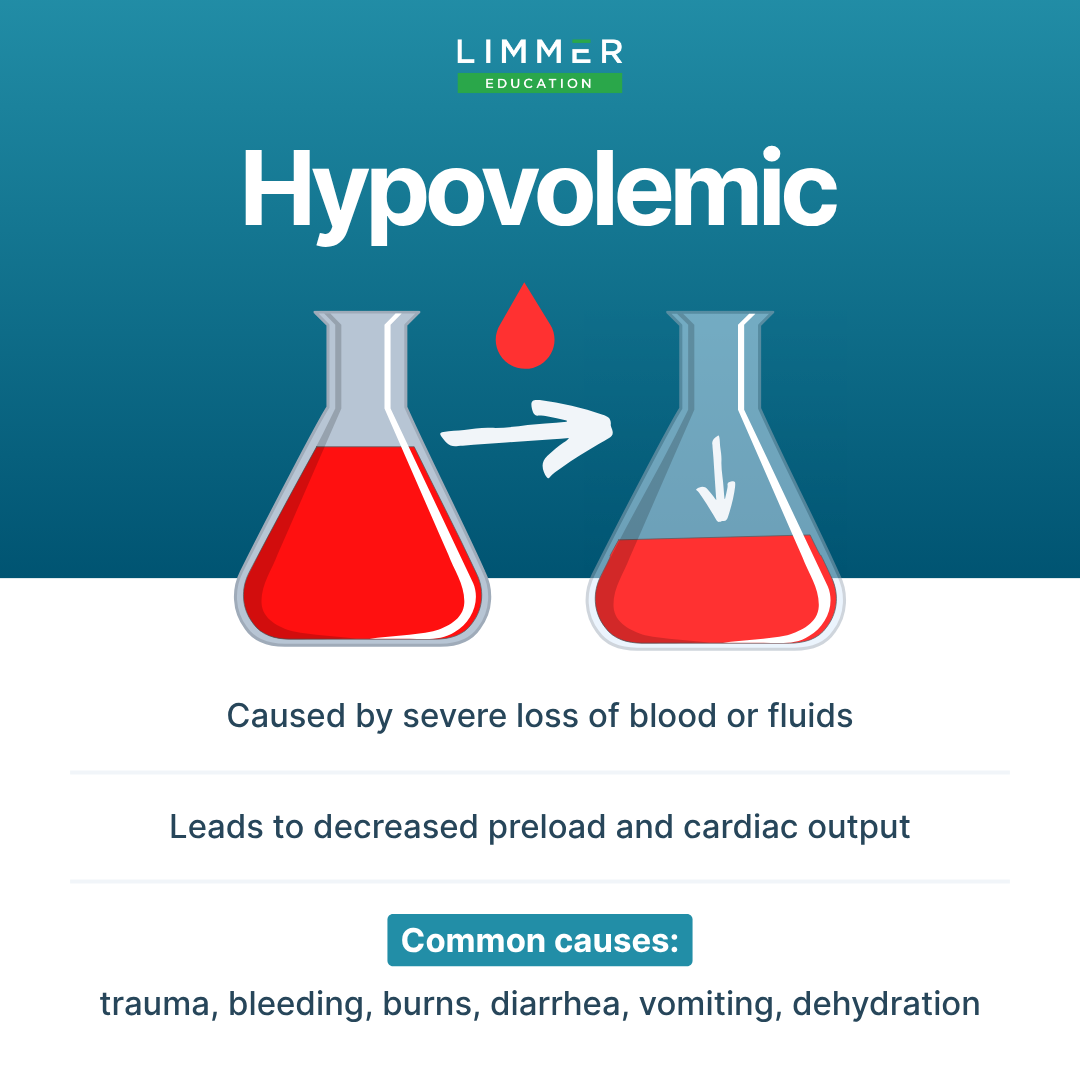
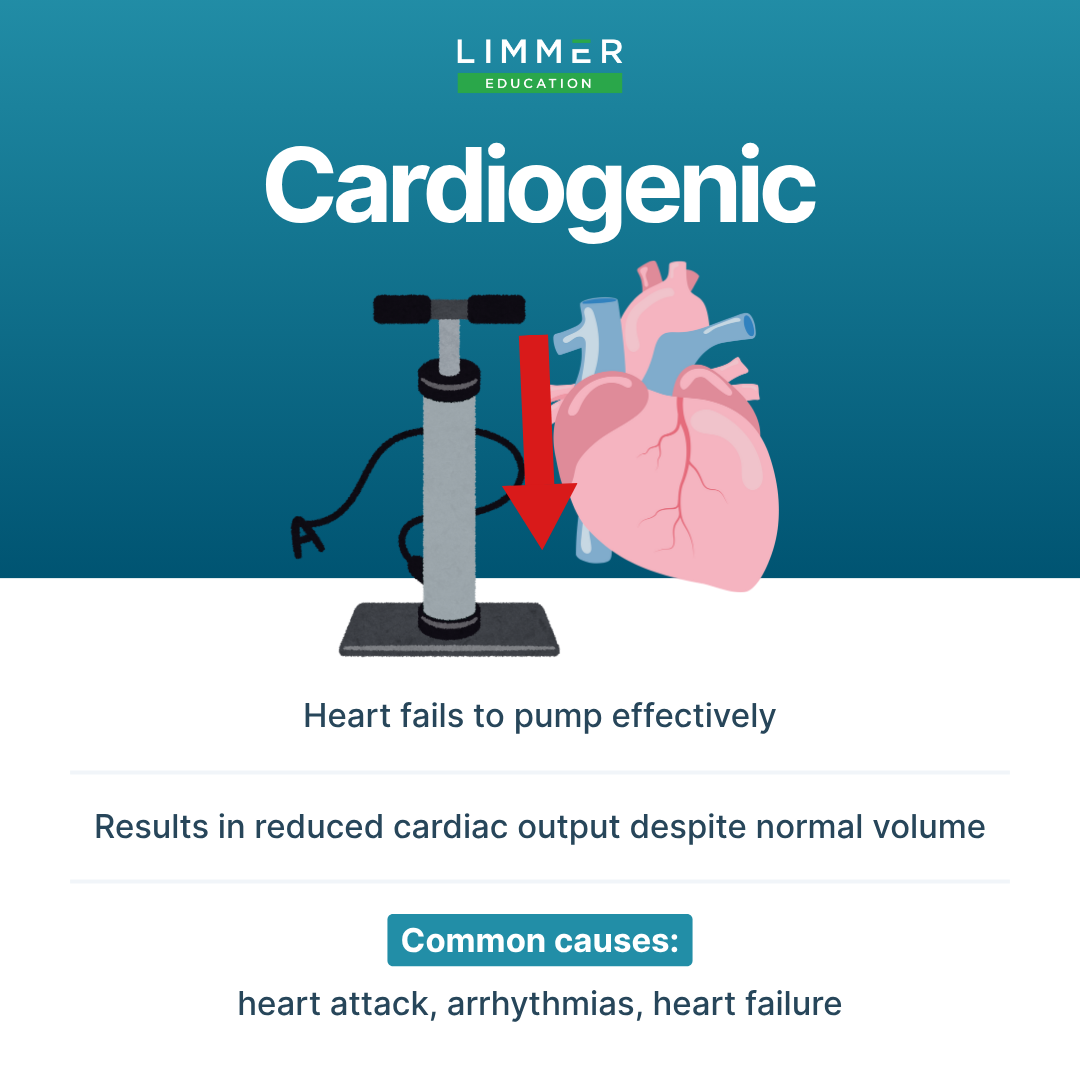
Cardiogenic shock is generally due to pump failure. There are two main cardiac causes of shock. The first is pump failure, which can happen acutely after a myocardial infarction, where muscle has been damaged, reducing the ability to pump. The second is heart rate. Extremely fast and extremely slow heart rates reduce cardiac output.
Recall that cardiac output is defined by the equation HR x SV = CO. In the case of rate changes, a slow heart rate (HR) reduces output, while a very fast rate prevents ventricular filling, reducing stroke volume (SV). The result in any of these cases? Hypoperfusion because of inadequate cardiac output.
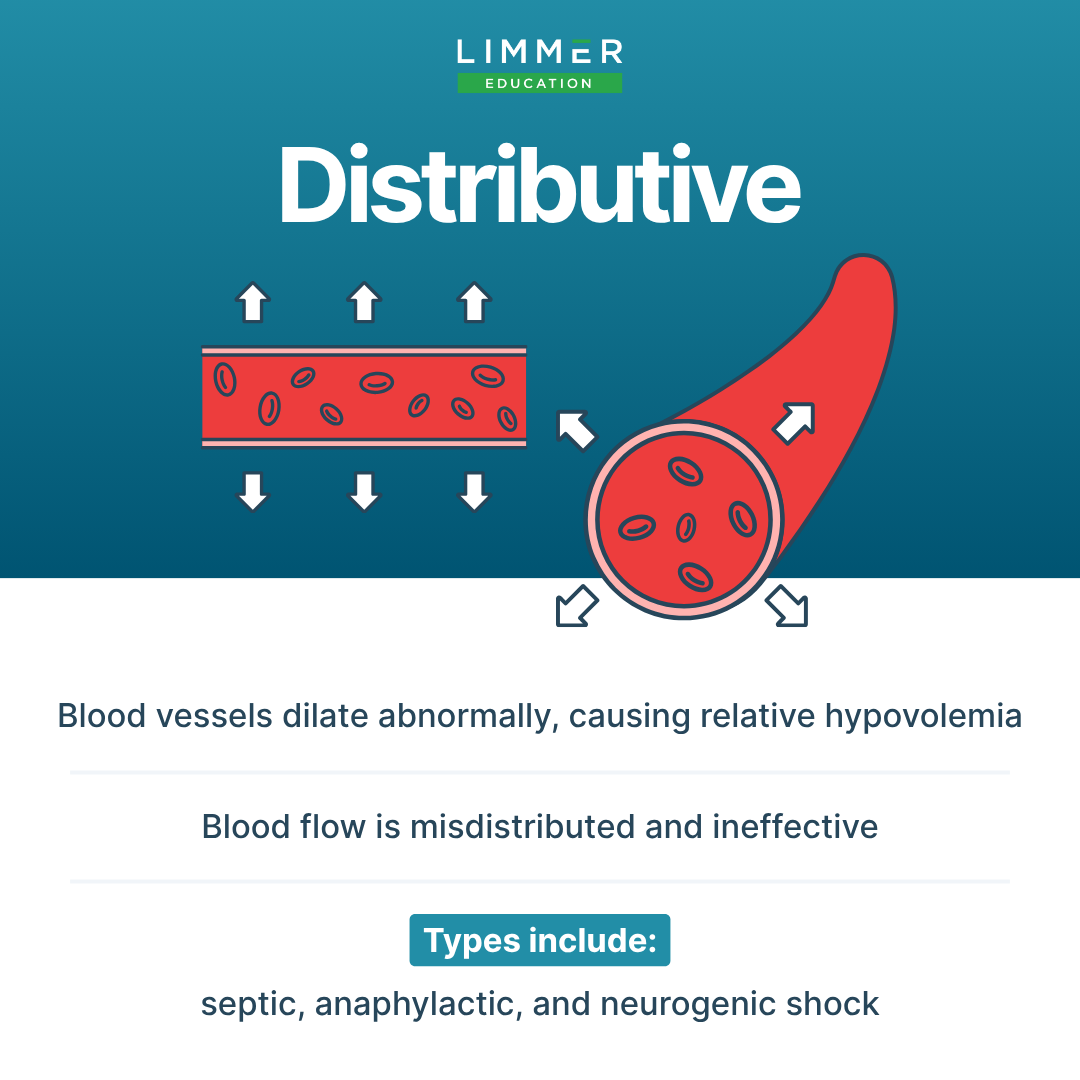
With distributive shock, the heart pumps the right amount of blood, but it's being distributed improperly. The blood vessel can no longer regulate its diameter. We call this a loss of vascular tone. It results in decreased blood flow and, ultimately, hypoperfusion.
For medical patients, the big causes of distributive shock are sepsis and anaphylaxis. Chemical mediators released in anaphylaxis (e.g., histamine) cause this vasodilation. Sepsis has a somewhat similar response as histamine, cytokines, and other substances, released because of overwhelming infection, cause a loss of vascular tone.
For trauma patients, it's spine injury, especially T1 through T6; that's where a lot of the sympathetic innervation goes out to the body. Damage to the upper thoracic vertebrae can disrupt the signals sent from the sympathetic nervous system to the heart and blood vessels. Vessels lose tone and dilate, reducing blood pressure. Normally, the loss of blood pressure is countered by tachycardia to increase cardiac output. Since the sympathetic nervous signals are no longer getting to the heart, the pulse remains at normal levels. The classic presentation of neurogenic shock is a patient with hypotension, a normal or bradycardic pulse, and cool, clammy skin above the level of the spine damage and normal or flushed skin below.
So distributive shock can come from anaphylaxis, sepsis, and neurological shock from spinal trauma.
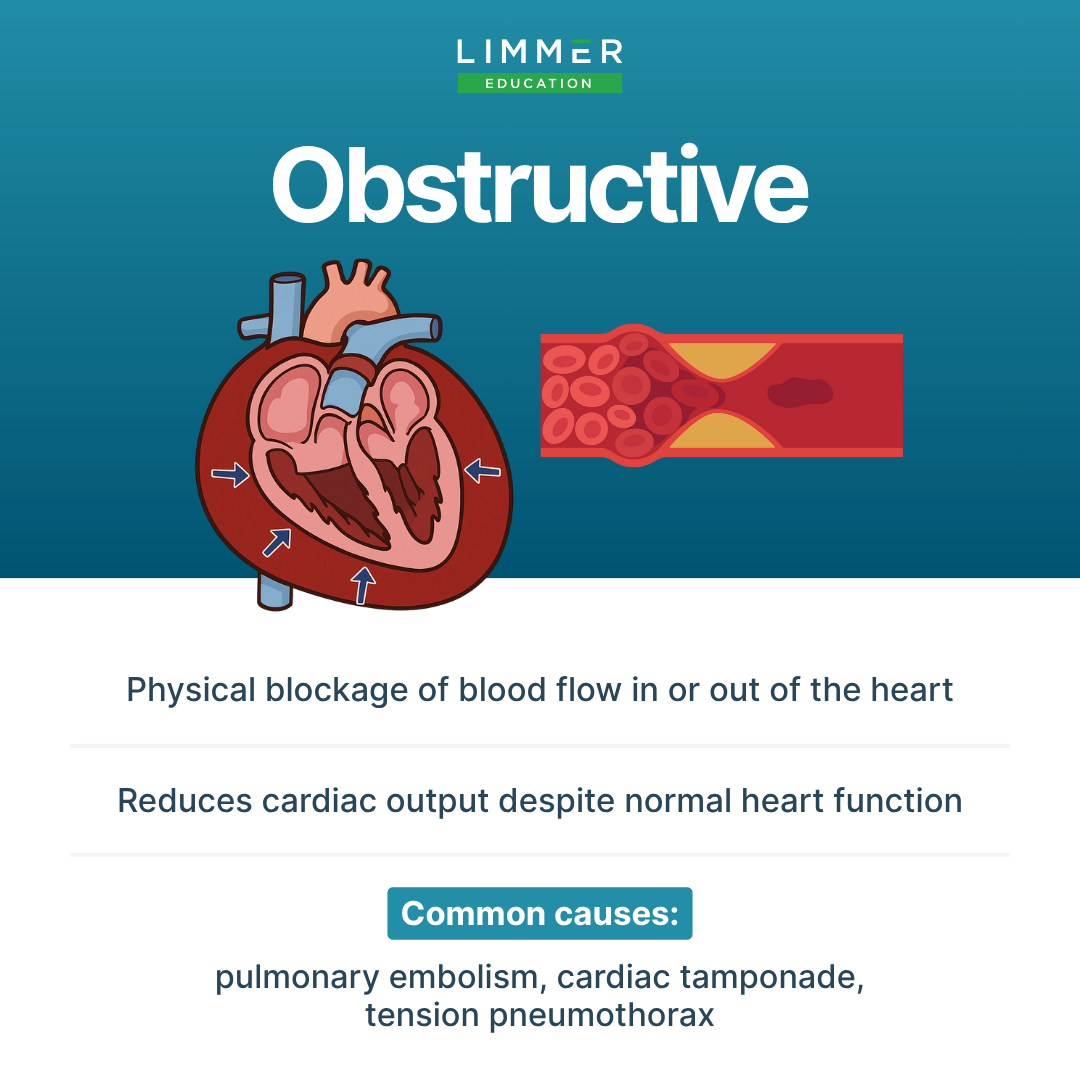
Obstructive shock happens when there’s something keeping blood from flowing. It is often associated with traumatic causes. Think of cardiac tamponade: When blood or fluid in the pericardial sac compresses the heart, it can't fill well. Tension pneumothorax is another cause of obstructive shock: The low-pressure inferior vena cava depends on changing pressures within the chest during normal breathing to get blood back to the right side of the heart (preload). But the increased pressure from tension pneumothorax keeps that from happening. The blood can’t return to the heart, which reduces stroke volume and blood pressure. That's obstructive shock.
The primary medical reason for obstructive shock is pulmonary embolism (PE). A deep vein thrombosis (DVT) formed in the calf dislodges and travels through the venous system, through the heart, and into the lung. It passes through pulmonary vessels, which reduce in size, eventually causing a blockage. Depending on the size of the vessel, a large PE may be catastrophic and cause sudden death, while smaller PEs may cause respiratory distress and chest pain.
When a person is in shock, their body quickly tries to compensate for the hypoperfusion. While the exact response varies depending on the type of shock, the body's reaction follows a predictable pattern.
First, the brain signals the sympathetic nervous system to activate the "fight-or-flight" response, which works to improve blood flow and preserve blood. Heart rate increases and blood vessels constrict to keep blood flowing to vital organs. That vasoconstriction causes pale, cool, moist skin. Additionally, breathing rate increases to keep oxygen levels up and blow off CO2. The body also releases hormones that signal the kidneys to retain fluid and the bone marrow to produce more red blood cells. These self-correcting mechanisms are known as compensated shock. Often, you can recognize these changes during a patient assessment, and they can temporarily help the body sustain normal function. A narrowed pulse pressure, the difference between systolic and diastolic pressures, may be seen at this stage.
You will notice delayed capillary refill time due to the hypoperfusion. Your patient may also exhibit slight mental status changes, with feelings of anxiety or doom.
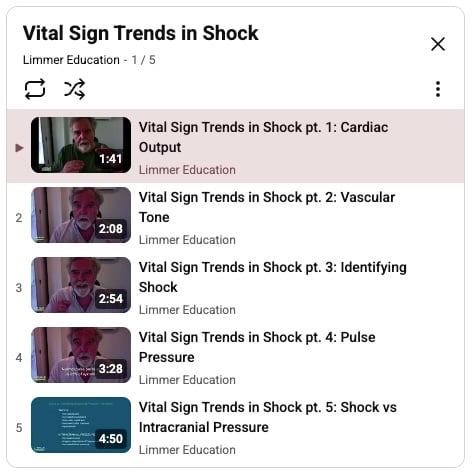
For a more in-depth picture of what EMS providers should understand about patient presentation and pathophysiology during shock, check out Dan Limmer's Vital Sign Trends in Shock video series.
What's the difference between compensated and decompensated shock? In compensated shock, the body can maintain perfusion. It can maintain a blood pressure or a mean arterial pressure (MAP) above a certain level–usually 65 mmHg. The pulse pressure often narrows during compensation for shock. Decompensated shock happens when the body can't do that anymore; it stops perfusing. A decreased blood pressure is seen as the primary transition from compensated to decompensated shock.
Shock is a life-threatening condition defined by the body's inability to perfuse tissues and remove waste. Whether stemming from low volume (hypovolemic), pump failure (cardiogenic), poor distribution (distributive), or an external blockage (obstructive), the body's predictable response involves a compensatory increase in heart rate and systemic vascular resistance to maintain blood pressure. At the foundational level, identifying shock, intervening with prompt transport, and maintaining body temperature before compensation fails is essential to patient survival.
Limmer Education
If you're an EMT or paramedic, you can parlay your expertise into a flexible and potentially lucrative side gig.

Limmer Education
Learn how to write better EMS multiple-choice questions that assess clinical judgment, not just memorization.


Dan Limmer, BS, NRP
Understanding pathophysiology transforms guesswork into informed, patient-centered decision-making.