


Limmer Education
Build a study plan that fits your life, identify the gaps holding you back, and practice in a way that strengthens critical thinking.
by Limmer Education
Our articles are read by an automated voice. We offer the option to listen to our articles as soon as they are published to enhance accessibility. Issues? Please let us know using the contact form.
Failing the NREMT can feel like the worst‑case scenario, but with the right remediation, a clear understanding of your score, and targeted study prep tools, it can actually become the reset that helps you finally pass and become a strong EMT, AEMT, or paramedic.
You need to know: You CAN pass.
After your NREMT exam, you see a numerical score. That number often causes confusion, because most students are used to simple classroom percentages. The NREMT works differently.
A passing score on the NREMT is 950, with the scale running 100-1500. That doesn’t mean “95%” or “15%.” The NREMT uses a complex algorithm that factors in question difficulty, topic areas, and question types to determine whether you meet entry‑level competence. Interpreting your result means looking beyond the number at how you prepared and how long it’s been since class.
Instead of asking, “What does 7xx or 8xx mean as a percentage?” ask these types of questions:
Did my class prepare me?
If your class was weak in any content areas, you’ll need to try to rebuild your EMS educational foundation.
Did I learn during class? Did you read, take notes, ask questions, and pass exams solidly, or did you coast?
If you didn’t really understand the material the first time, you now know you have some catching up to do.
How long did I wait after class before testing?
If it’s been more than 30-60 days without a serious plan, you’ve likely forgotten key material and need a study strategy and not last‑minute cramming.
Your NREMT score is telling you something about your preparation, your test‑taking, or both. The key is to respond to that signal with a new plan and not simply another attempt at passing.
The NREMT allows up to three attempts at passing. After three unsuccessful attempts, you’re required to complete a formal remediation course (20 hours for EMT, 25 hours for AEMT, 30 for paramedic) before you can test again.
That requirement is not considered a punishment. Remediation is a chance to learn what you didn’t quite get the first time, a way to strengthen clinical reasoning and critical thinking, and a reset that turns repeating mistakes into corrected habits.
Remedial courses aren’t only for people who hit the three‑attempt mark. They work extremely well as an NREMT prep for:
Students who have failed once or twice and don’t want to reach three failures, especially those with scores below 850.
Graduates who waited too long to test and now feel rusty.
Students who know they didn’t have good class instruction, either because of the program itself or because personal circumstances got in the way of fully focusing on the coursework.
Limmer Education’s EMT (20 hours), AEMT (25 hours), and paramedic (30 hours) remediation courses are designed to meet NREMT requirements and change how you understand and apply EMS content.
In these courses, you will:
Spend sessions with Dan Limmer reviewing the scope of practice in a structured, easy‑to-follow way.
Start each session with an overview and case study to connect content to real‑world patient scenarios.
Work through key terms and concepts using drawings, explanations, and critical‑thinking activities.
Receive NREMT‑style review questions that mirror the exam’s application‑level thinking.
Completion of the classes and videos doesn’t only “check the remediation box," it gives you a complete path from failed attempt to ready-for-retest.
You need both the right remediation course and the right habits:
Choose a course that truly educates and engages, covers the curriculum and critical thinking, and uses realistic NREMT‑style questions.
Build better study habits: Put distractions away, focus on application instead of memorization, and spend most of your time on weak clinical areas.
Recognize non‑content weaknesses:
If you’re mad at failing the NREMT, work on separating emotion from preparation.
If you have learning challenges (e.g., reading, retention, or concentration), seek support and adjust your study methods.
If motivation is low, do some honest soul‑searching about whether EMS is what you want, and if it is, commit fully to the work.
All of these can be addressed if you’re willing to adapt.
A failing NREMT score doesn’t define your future in EMS. It simply shows that something in your preparation or approach needs to change.
Whether you’re preparing for your first NREMT exam or recovering from a failed attempt, Limmer Education offers trusted EMS study tools designed to help you succeed. Our resources are built to strengthen your understanding of EMT and paramedic concepts, improve clinical reasoning, and prepare you for the latest NREMT question styles.
EMTReview.com
EMTReview.com features high-quality practice questions modeled after the current NREMT exam, including all of the newest question formats, detailed rationales, and realistic practice exams that build confidence and test-taking skills.
If you have failed the NREMT more than three times or need a deeper review of core material, Limmer’s EMT remediation, AEMT remediation, and our new paramedic remediation courses are designed to help you rebuild foundational knowledge and improve your understanding of challenging EMS topics. These courses fulfill NREMT remediation requirements while providing structured instruction focused on long-term success.
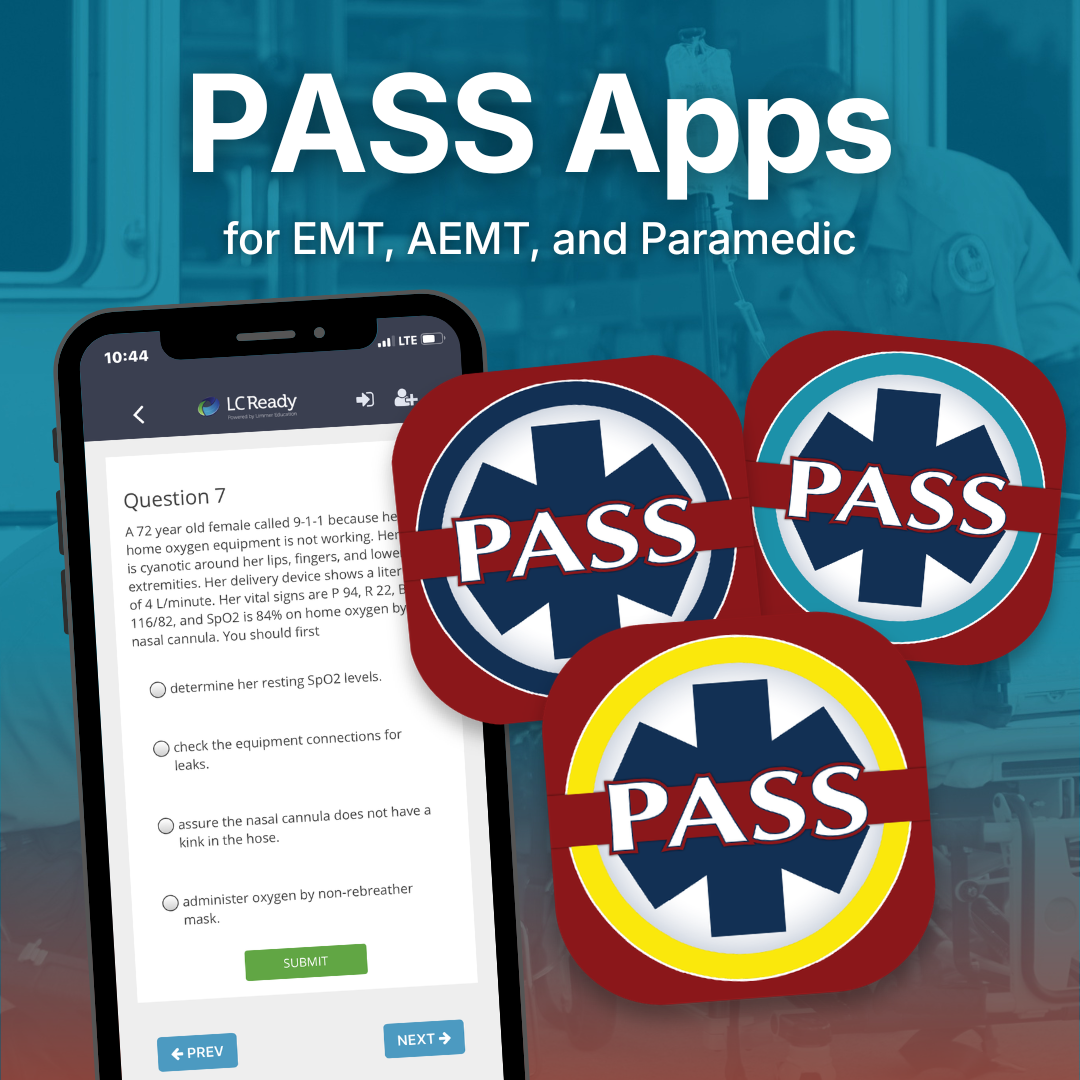
Limmer’s EMT PASS, AEMT PASS, and Paramedic PASS apps help refresh critical knowledge and reinforce content. Choose focused review apps covering assessment, airway management, pharmacology, trauma, and special populations to strengthen the areas most critical for exam success and clinical practice.
At Limmer Education, our mission is simple: help EMS students succeed. Whether you are preparing for your first NREMT attempt or regrouping after a setback, we’re here to get you a passing score.
Limmer Education
Build a study plan that fits your life, identify the gaps holding you back, and practice in a way that strengthens critical thinking.
Limmer Education
Here’s a look at how EMS education has changed and why patient assessment has become valuable to learn.


Dan Limmer, BS, NRP
With ongoing updates from the American Heart Association, the NREMT exam is changing by emphasizing current science.