



Limmer Education
Most EMT students do not struggle on the NREMT because they lack effort, they struggle because their study methods do not match the exam.
by Limmer Education
Our articles are read by an automated voice. We offer the option to listen to our articles as soon as they are published to enhance accessibility. Issues? Please let us know using the contact form.
You made it through EMT class, put in the work, and pictured yourself taking the next step toward the rewarding career you wanted.
And you failed the NREMT… getting a result you weren’t hoping for hurts.
Take a breath. This isn’t where your plans must end.
Before you schedule another attempt or dive into hundreds of practice questions, pause and ask yourself: What needs to change this time?
Limmer Education’s Dan Limmer starts with a question that can be tough to answer, “Were you really ready?”
Not “Did you want to pass?” Of course you did. But how did you prepare?
Think back to EMT class. Did you keep up with the reading? Pay attention? Study consistently? Were you working to understand the material, or mostly doing what you needed to get through the next test?
Then think about what happened after class ended. How long did you wait to take the National Registry? What did studying look like during that time?
This isn’t about giving yourself a hard time. It’s about figuring out what you can do differently. Getting through class and being ready for the National Registry aren’t necessarily the same thing.
Limmer says to be honest with yourself.
I need to study harder” doesn’t give you much direction. “I kept avoiding the topics I didn’t understand” gives you a study goal.
It’s natural to walk out of an unsuccessful NREMT attempt thinking, “Okay, I need to study those questions.”
But the questions you remember shouldn’t become your whole study plan.
As Limmer explains, your next exam may feel very different. The National Registry has thousands of items in its question bank, and every exam varies. If you focus only on what you saw last time, you could leave other gaps in your study plan.
Give your weaker subjects extra attention but keep reviewing the full range of material from your course.
You’re not preparing to retake the exact exam you just took. You’re preparing for the next one.
When you miss a practice question, what happens next?
Do you check the right answer, think, “Got it,” and move on?
That’s an easy habit to fall into. Knowing which answer was correct isn’t the same as understanding why it was correct.
Slow down and work through it:
Read the explanation.
Go back and reread the question.
Find the detail you missed or misunderstood.
Explain why the correct answer fits better than the other choices.
Maybe you noticed your patient assessment skills need work, e.g., a patient was breathing but overlooked that the breaths were shallow. Maybe you recognized an abnormal heart rate but didn’t connect it to the rest of the patient’s condition.
The goal isn’t to remember, “The answer was C.” It’s to understand, “Here’s what this finding tells me, and here’s why it changes my decision.”
Keep a notebook or document open while you study. Whenever you run into an unfamiliar term, a confusing concept, or something you can’t explain confidently, write it down.
Then go back to your textbook and look it up.
In Limmer’s approach, you don’t have to keep rereading the book from cover to cover. Use it to answer the specific questions your practice sessions bring up.
Practice questions help you find the gaps. Your textbook helps you work through them.
And don’t stop at “That looks familiar now.” See whether you can explain the concept in your own words.
Limmer describes three parts of preparation:
Knowledge
Familiarity with exam-style questions
Confidence
This is what he calls “mojo.”
That doesn’t mean forcing yourself to feel positive or pretending you’re not nervous. It means building confidence through the work you’re doing.
You understand something that confused you last week. You catch a detail you used to miss. You can explain why an answer makes sense instead of guessing.
You also don’t have to do this alone. When recovering from a failed attempt, Limmer Education offers trusted EMS study tools designed to help you succeed. Our resources are built to strengthen your understanding of EMT and paramedic concepts.
EMTReview.com features high-quality practice questions modeled after the current NREMT exam, including all of the newest question formats, detailed rationales, and realistic practice exams that build confidence and test-taking skills.
If you've failed three times, consider taking advantage of Limmer's Remediation course before attempting the exam again. This reviews the EMT scope of practice and fulfills the NREMT’s requirement of 20-hour remediation.
It’s okay to say that failing the NREMT hurt. But your next round of studying can look different: less chasing scores, more understanding your mistakes, and a clearer plan for what to work on next.
Limmer Education
Most EMT students do not struggle on the NREMT because they lack effort, they struggle because their study methods do not match the exam.


Dan Limmer, BS, NRP
With ongoing updates from the American Heart Association, the NREMT exam is changing by emphasizing current science.
Limmer Education
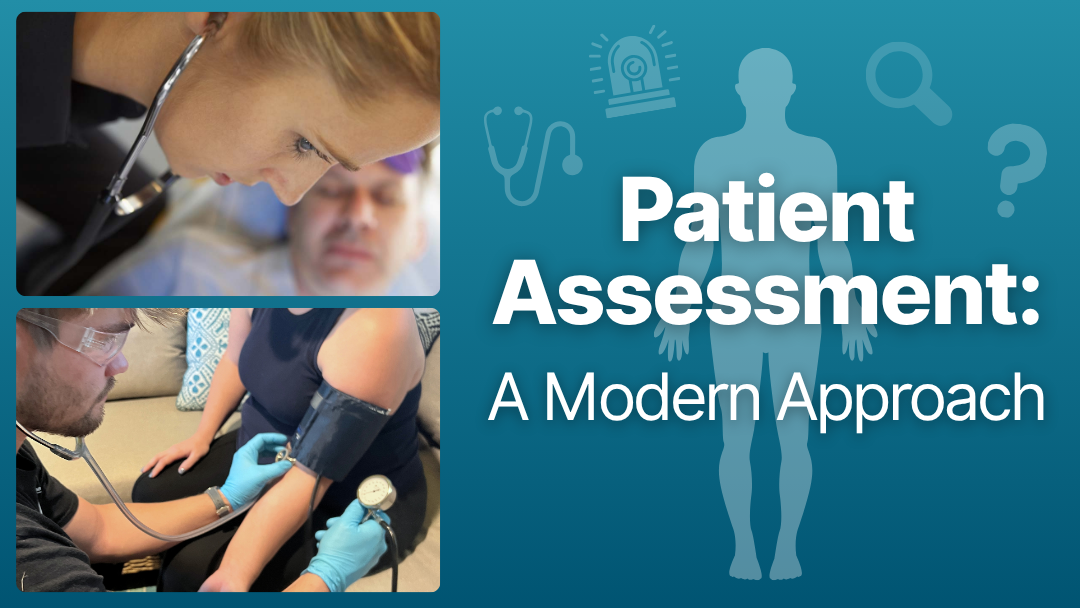
Here’s a look at how EMS education has changed and why patient assessment has become valuable to learn.