


Limmer Education
Get the latest EMS guideline changes impacting trauma care, resuscitation, and education nationwide.

by Dan Limmer, BS, NRP
Our articles are read by an automated voice. We offer the option to listen to our articles as soon as they are published to enhance accessibility. Issues? Please let us know using the contact form.
Each time new American Heart Association (AHA) guidelines are released, the same questions consistently come up: When will the NREMT implement the AHA changes on the exam? And how will NREMT candidates know which guidelines (past or current) will be tested?
In the old days, the NREMT would announce a date for the “switch.” That isn’t done anymore. Changes happen slowly.
I was recently at the Texas EMS Educator Symposium and asked NREMT representatives what educators and students should do when any guidelines change. Here are the answers I got:
Educators should teach new science when it comes out, and students shouldn’t worry about memorizing or balancing two sets of information.
Educators should teach new science when it comes out, and students shouldn’t worry about memorizing or balancing two sets of information.
The NREMT monitors guideline changes closely. With a conflict between old and new science, the NREMT removes exam items that cause conflict between the different guidelines.
Many times, we aren’t even aware of these conflicts. One that comes to mind is the AHA’s addition of back blows (slaps) in the 2025 guidelines. Although this is new to the AHA, the American Red Cross (ARC) has always had back blows in its courses. Because the NREMT will accept both AHA and ARC CPR cards, they’ve never been able to offer a question with the correct answer "back blows."
The NREMT often presents questions on application or decision-making rather than recall of facts. Asking questions about underlying pathophysiology or about which broad-stroke priority (hypoxia vs shock) is most important also helps avoid step-by-step or procedural questions that get tangled up with guideline changes.
Every question appearing on the NREMT exam and counting toward a student’s score was served as a pilot question to at least 300 candidates and was proven valid. The NREMT representative told me that it is normal for this process to take up to 18 months from when a question is created to when it is validated and placed in the exam bank.
This means exams don’t change overnight. The NREMT knows that. Now you know that. In each question, you simply have to choose the correct answer from the choices given.
Not knowing a particular item from a guideline or recommendation won’t cause you to fail the exam. Let’s say you weren’t taught about delayed cord clamping and cord milking as presented in the 2025 guidelines in your course OB content, and you get a question or two on that topic on the exam. You get one or both wrong. That doesn’t mean you fail. One or both of those could even be pilot items that don’t count toward your score. Don’t freak out!
The NREMT exam measures entry-level competency. It looks at the candidate’s performance using a complex algorithm. The exam will know you got those questions wrong, but it doesn’t mean it will fail you or beat you down with more questions on the same topic.
Here’s the reality:
You’ll never know everything. No one gets 100% on the NREMT exam.
Remember that the exam is adaptive, and questions get more challenging as you go along and answer (hopefully) correctly. The exam has evolved to the point in which it assesses you as an EMS provider in totality, rather than as an EMT with trauma or a paramedic with pediatric knowledge.
Here is what to know:
Study and pay attention in class.
Take the test in front of you and avoid the stress of worrying about which guidelines will be tested.
Answer each individual question you are served to the best of your ability. Read it carefully and choose the correct answer from the facts and information you are given.
Focus on becoming the best EMS provider you can be. While you are in EMS, science and guidelines will change frequently. Recognize this is part of medicine.
Now go and study. Focus on the right things: current science and recommendations. And then study more.
For study guidance, Limmer Education offers PASS apps. They are more challenging than the NREMT itself. If you can succeed on PASS practice exams, you can succeed on the NREMT!
With over 700 questions and detailed rationales created by former NREMT staff, EMT PASS is built to train your thinking for success on the National Registry exam.
With more than 550 questions and in-depth rationales developed by former NREMT staff, AEMT PASS is designed to sharpen your clinical thinking for the National Registry exam.
With over 500 questions and expert rationales written by former NREMT staff, Paramedic PASS is built to train your thinking for the National Registry exam. The questions are demanding but designed to help you pass on your first attempt.
Limmer products are regularly updated to keep up with changing best practices, NREMT standards, and AHA guidelines.
Limmer Education
Get the latest EMS guideline changes impacting trauma care, resuscitation, and education nationwide.
Limmer Education
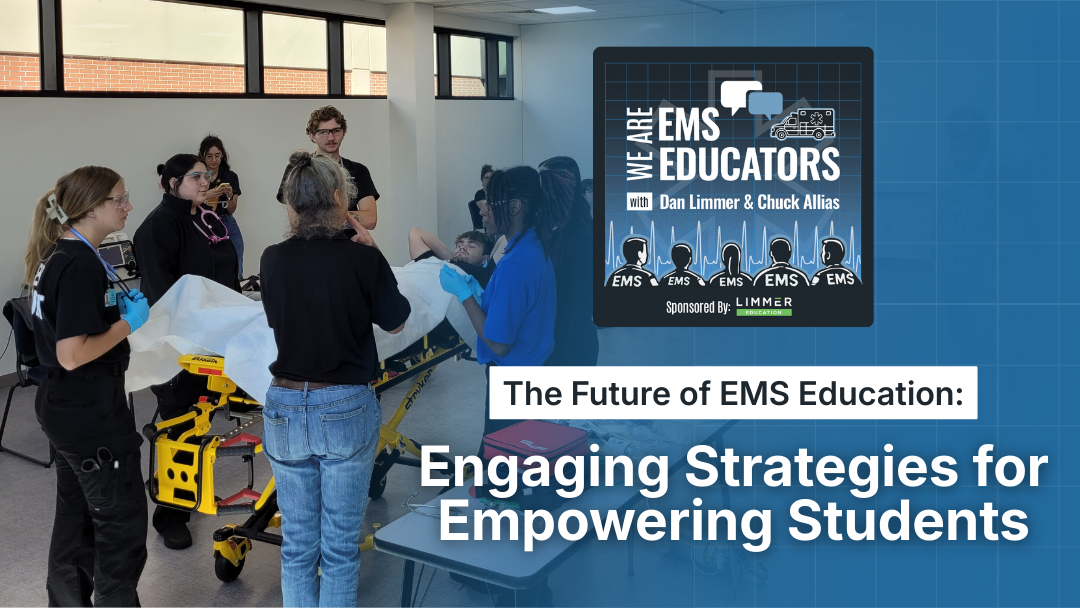
Educators must adapt teaching strategies to engage modern EMS students.
Limmer Education
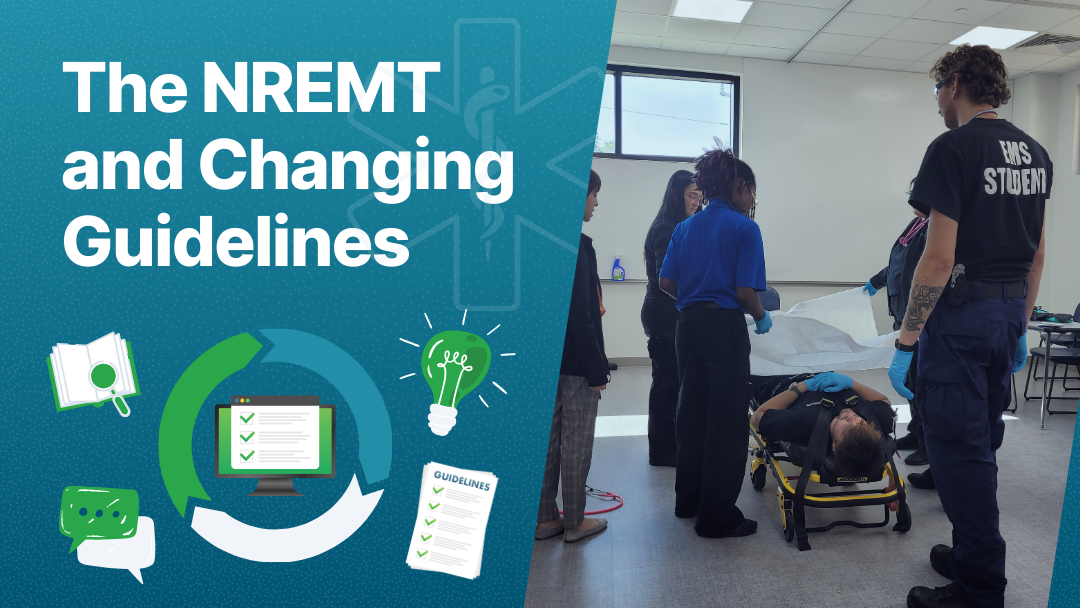
EMS is always changing. How do educators keep up with teaching for all the changes?