



Limmer Education
Learn how to interpret your score, create a remediation plan, and use targeted study tools to pass your NREMT.
by Limmer Education
Our articles are read by an automated voice. We offer the option to listen to our articles as soon as they are published to enhance accessibility. Issues? Please let us know using the contact form.
The NREMT EMR exam is not about knowing every answer. It is about knowing what to do first when a patient needs help. In short, it prepares you for the job.
If you’re getting ready to take it, you probably have the same questions as everyone else: How hard is it? How many questions are there? What does “computer adaptive” mean? And what is the best way to study?
The NREMT EMR gives you test questions that change based on your answers. When you answer correctly, the computer may give you a harder question next. (This is computer adaptive.)
It has 90-110 questions.
There is a 1-hour, 45-minute time limit.
To pass, you should focus your studies on scene safety, the primary assessment, CPR and AED care, airway and breathing emergencies.
You need to know what matters most for the patient in front of you.
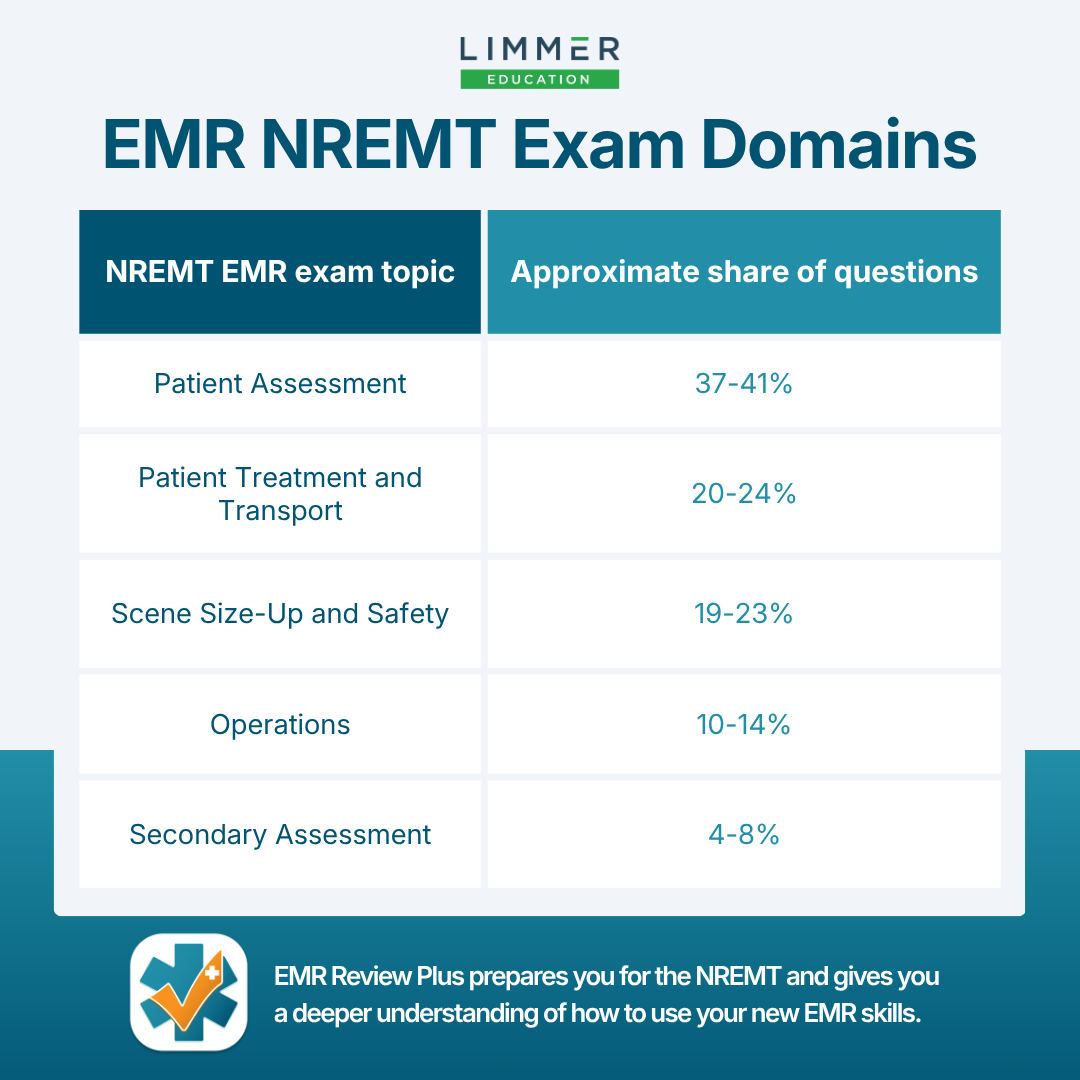
The biggest part of the NREMT EMR exam is the patient assessment. Before you worry about a small injury or a detailed medical history, you must be able to spot immediate threats to life.
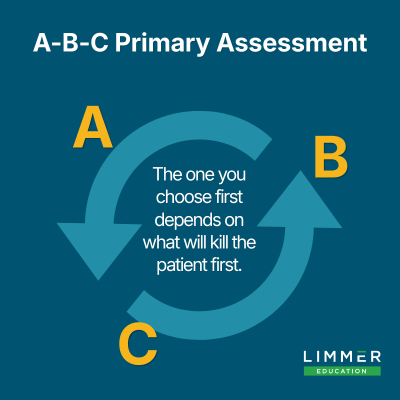
The most important question to ask yourself as you prepare for the test is this: What’s the patient’s biggest problem right now?
A patient may have a painful broken arm. However, if they’re not breathing normally, breathing comes first. A patient may be confused and scared. But if they have severe bleeding, controlling the bleeding is the first thing to do. The NREMT wants to see that you can find the priority.
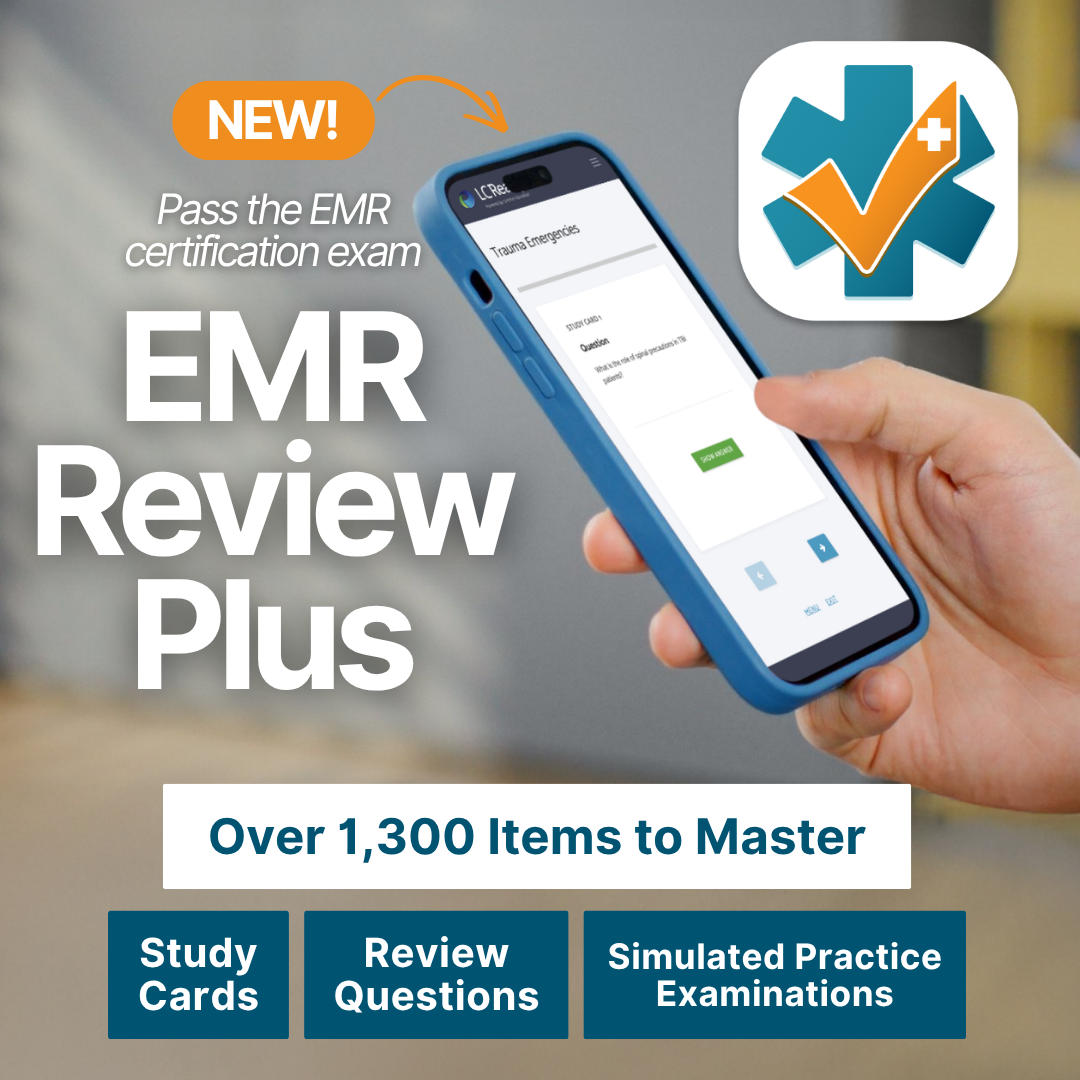
To prepare you to step out in the field with confidence, we recommend Limmer’s EMR Review Plus. With 1,300 review items, study cards, and simulated practice exams, you’ll get plenty of opportunities to test your knowledge, sharpen your skills, and discover what you still need to work on to pass the NREMT.
The NREMT EMR exam uses computer adaptive testing, also called CAT.
A CAT exam changes as you answer questions. When you answer a question correctly, the next question may become harder. If you miss a question, the computer may give you an easier question. The exam continues until the computer has enough information to decide whether you meet the NREMT passing standard.
A hard question is not necessarily bad news. It may mean you are doing well enough that the test is challenging you.
Don’t try to guess whether you passed based on the number of questions you receive. Some people finish at 90 questions. Others answer 110. The number does not tell you whether you passed or failed.
Instead, only focus on the question in front of you. Read the scenario carefully, decide what matters most, choose the safest answer, and move on to the next question.
The NREMT says EMR candidates should know the current American Heart Association guidelines for CPR and Emergency Cardiovascular Care, as well as the National EMS Education Standards.
Start with the assessment. You should be able to:
Recognize an unsafe scene
Use appropriate personal protective equipment
Assess responsiveness
Find serious airway, breathing, circulation, bleeding, and shock problems
You should also review these categories:
CPR
AED
Choking emergencies
Airway support
Breathing problems
Cardiac arrest
Trauma
Medical emergencies
Pediatric and older-adult patients
Patient movement
EMS operations
Your class notes and textbook are important. But do not stop at rereading them.
The NREMT does not simply ask, “What is shock?” It may describe a patient who is pale, sweaty, confused, and weak after a serious injury. Then it asks what you should do first. This is when EMR Review Plus becomes super useful. It helps you go beyond memorizing definitions. You learn how to put your EMR knowledge into action when it matters most.
You must know the facts and know how to use them.
The best study plan is the one you will follow.
Start by reviewing one topic at a time. For example, spend one study session on airway and breathing emergencies. Then answer practice questions on that same topic. When you finish, read the rationales for every question, including the ones you answered correctly.
Rationales teach you more than right and wrong. They show you why one action is the best action and why another answer may be too slow, unsafe, or less important. That is how you improve your critical thinking.
If you keep missing questions about trauma, go back and study trauma. If operations questions make you uncomfortable, spend time on this topic instead of reviewing the material you already know well.
Study tip: Practice questions are a way to find weak spots before test day.
The NREMT EMR exam is challenging. When you see a hard question, slow down. Read the whole scenario. Look for the biggest threat to life. Think about what needs to happen first. Then choose the safest answer available.
Do not let one confusing question throw off the rest of your exam. You do not need to feel perfect after every question. You just need to keep making the best decision you can with the information you have.
Get enough sleep, arrive early, and trust your training.
The NREMT EMR exam has between 90-110 questions.
You have up to 1 hour and 45 minutes to complete the NREMT EMR cognitive exam.
Yes. The NREMT EMR exam is computer adaptive. Question difficulty can change based on how you answer earlier questions.
For many students, the hardest part is deciding what to do first in a patient scenario. The assessment is the largest exam domain, and students should practice recognizing immediate threats to life and choosing the safest next action.
Review your course materials and CPR guidance, then use application-based practice questions. Read the rationales, identify weak areas, and keep practicing until you can explain why the best answer is best.
You need to know the basics, recognize serious problems, and make safe decisions. Start early and practice often with Limmer’s EMR Review Plus to train yourself to think like an EMR clinician.
Limmer Education
Learn how to interpret your score, create a remediation plan, and use targeted study tools to pass your NREMT.


Dan Limmer, BS, NRP
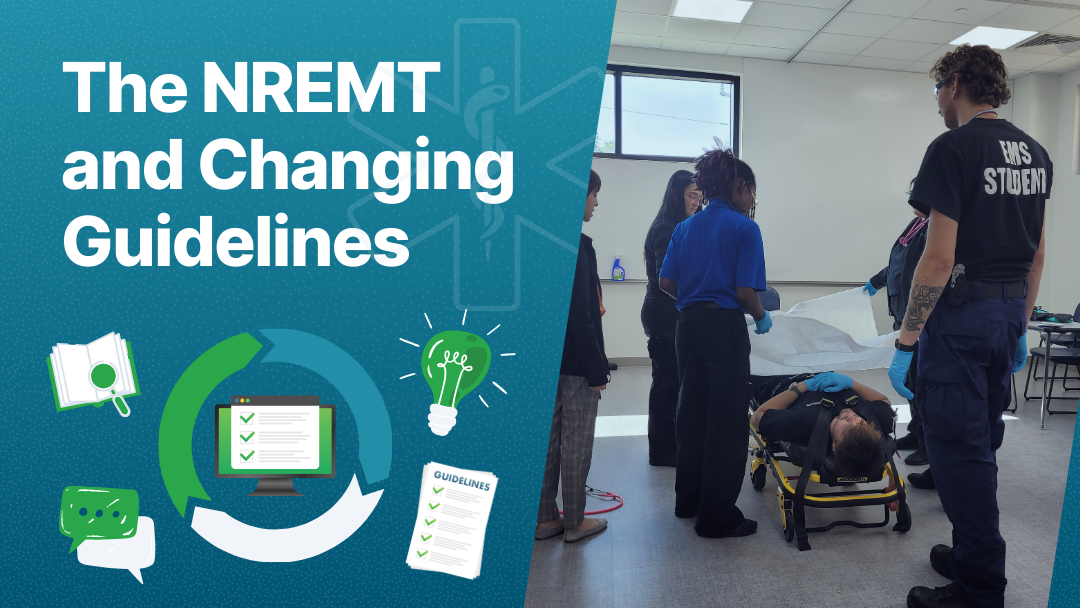
With ongoing updates from the American Heart Association, the NREMT exam is changing by emphasizing current science.
Limmer Education
EMS is always changing. How do educators keep up with teaching for all the changes?